
Results of the 2017 BDSM Study
In this article
"Results of the 2017 BDSM Study" was written for BDSMforyou.nl by Mistress Moriah.
Sometimes I get asked whether any research is done on BDSM and whether I would be willing to share the results of a BDSM study. As far as I know, it doesn't happen often, but there are certainly some research results. Today I would like to share with you the results of the study "Bondage-Discipline, Dominance-Submission and Sadomasochism (BDSM) From an Integrative Biopsychosocial Perspective: A Systematic Review". This study was carried out by Nele De Neef, Violette Coppens, Wim Huys and Manuel Morrens.

Variation in participation
This study into the prevalence of BDSM activities shows variation in participation within the general population. A Belgian study from 2017 reported that 46.8% of respondents had engaged in at least one BDSM-related activity, while 12.5% did so regularly. It also appears that men develop an interest in BDSM five years earlier on average than women and more often take on the dominant role, while women more often prefer the submissive role.
Biological factors
Biological aspects, such as gender identity and hormone levels, may influence BDSM preferences. Although there are few direct studies, some research suggests that variations in brain structures and neurobiological systems may be involved in the processing of pain and pleasure, which possibly contributes to BDSM interests.
Psychological aspects
Various psychological factors play a role in BDSM preferences. For example, personality traits such as openness to new experiences and extraversion are associated with a greater interest in BDSM. A link has also been found between BDSM preferences and certain attachment styles, although the results vary. Importantly, studies have not demonstrated a direct link between BDSM preferences and psychiatric disorders. Of course, we have known this for a long time.
Social factors and stigma
Despite growing acceptance, a social stigma around BDSM remains. This stigma can lead to misunderstandings and discrimination. However, research shows that BDSM practitioners do not experience higher levels of psychological stress than the general population. In fact, some studies suggest that male BDSM practitioners report lower levels of psychological stress.
Conclusion
BDSM is a complex and multifaceted phenomenon that is influenced by an interplay of biological, psychological and social factors. Although progress has been made in understanding and accepting these practices, further research is needed to fully grasp the underlying mechanisms and to reduce the remaining stigma.
Mistress Moriah
Source
Text: Mistress Moriah
Photography: 123rf.com
Source
Dit artikel is ook beschikbaar in het Nederlands →
Read also

What is BDSM?
What is BDSM? BDSM is an incredibly broad concept. But what exactly is BDSM? That’s actually quite difficult to explain. Yes, it’s an acronym for…
19 March 2026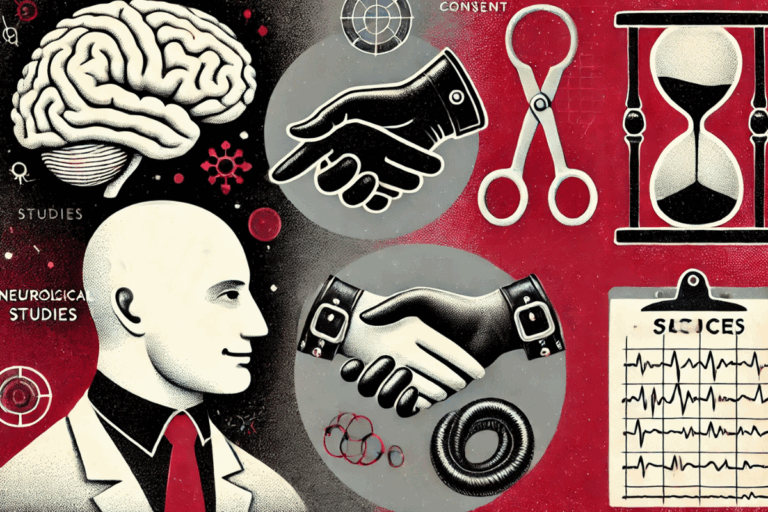
Are there scientific sources about BDSM?
Are there scientific sources about BDSM? Of course, I can very easily shout from the rooftops how normal BDSM is, how beautiful, intense and natural…
16 January 2025
The erosion and destruction of BDSM
The erosion and destruction of BDSM. But fortunately, we alone are responsible for letting the sun shine in our lives… For me, BDSM—and Femdom in…
11 May 2026