
What does fear do to us? Mentally and physically?
In this article
“What does fear do to us? Mentally and physically?“ was written for BDSMforyou.nl by Mistress Moriah.
Fear plays an important role in BDSM. After all, you hand over control and have to trust that the other person will handle it with care. Beforehand, you don't know what awaits you. Fear can be experienced briefly, but it can also last longer. The intensity can vary too. There is, however, a difference between being startled and real fear. Being startled is a normal physical reaction to an unexpected moment, a reflex. Fear goes deeper.
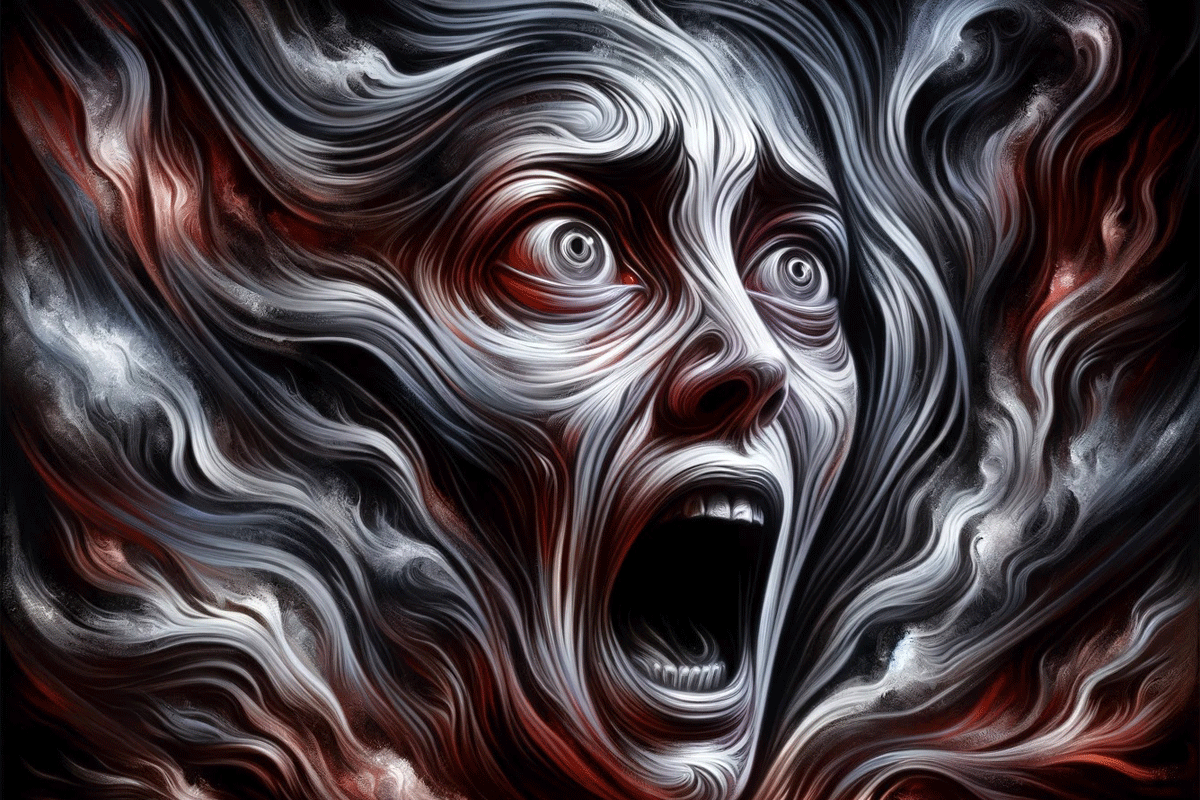
Feeling fear is only logical
It is logical that you can feel fear when something is new and unfamiliar. The unexpected, not knowing what is going to happen. But it shouldn't turn into blind panic, of course. So it is an important task for the Dominant to stay vigilant at all times. Even when you have been playing together for a very long time. Because it can easily happen that someone reacts more intensely one time than another. For example because of lowered resistance, tiredness, being a bit more emotionally unstable, or whatever it may be.
Are you new to each other? Then always discuss the absolute no-gos beforehand and take them into account. Agree on a code word, safeword or an emergency gesture. And above all, keep a very close eye on each other. Only with deep respect for the other person can the most beautiful experience come about. Mild fear is fine and can contribute nicely to the intensity of the play, but it must never tip over into blind panic.
What does fear do?
It might be interesting to go a bit deeper into fear. Because what does it do to us? And is fear really as bad an adviser as the saying would have us believe? Fear is an ancient emotion, deeply rooted in our brain. And we don't have this feeling for nothing. Your heart skips a beat, your breathing speeds up and your muscles tense....
Fear has helped us survive for centuries. Think of it as a built-in alarm system that goes off when there is danger. This alarm system is located in the amygdala, a small almond-shaped area in the brain that responds to threats. As soon as the amygdala detects danger, it activates the hypothalamus, which in turn prompts the sympathetic nervous system and the adrenal glands into action. And then the hormone party begins.
Adrenaline: your personal turbo booster
One of the first hormones to kick in is adrenaline. This hormone, also known as epinephrine, is your personal turbo booster. Adrenaline is released by the adrenal glands in no time and prepares your body for the famous 'fight-or-flight' response. What exactly does adrenaline do? Well, it raises your heart rate, so your blood flows faster and your muscles get more oxygen. This means you can run in the blink of an eye as if your life depends on it, or fight with the strength of a superhero. On top of that, adrenaline makes you alert and focused, ready to tackle any threat.
Noradrenaline: adrenaline's sidekick
Adrenaline doesn't do this alone, however. It gets help from noradrenaline, a hormone that is also produced by the adrenal glands. Noradrenaline works together with adrenaline to put your body in a state of readiness. It raises blood pressure by constricting the blood vessels, making you even sharper. Together, adrenaline and noradrenaline form a dynamic duo that ensures your body is ready to take on any challenge.
Cortisol: the marathon runner among the hormones
Besides adrenaline and noradrenaline, there is another major player in the fear game: cortisol. This hormone, also known as the stress hormone, is released a little more slowly by the adrenal glands and stays in your system for longer. While adrenaline and noradrenaline prepare you for immediate action, cortisol ensures that your body can cope with stress for longer. It raises your blood sugar level so you have more energy, and suppresses less urgent functions such as the immune system and digestion. That way you can focus entirely on surviving the threat.
Fear and modern humans
It is no surprise that our ancestors were often confronted with life-threatening situations, such as predators or hostile tribes. But what about us, modern humans? We may no longer have sabre-toothed tigers to run away from, but that doesn't mean we don't know fear. Nowadays, a job interview, an exciting BDSM experience or a first date can just as easily activate the amygdala and set the same hormonal cocktail in motion.
The consequences of chronic fear
A little fear here and there does no harm. In fact, it keeps us sharp and can help us perform better. But what happens when that fear becomes chronic? When you are under constant stress and adrenaline, noradrenaline and cortisol keep haunting your body. This can lead to a number of unpleasant side effects, such as high blood pressure, sleep problems and a weakened immune system. It is as if your body is permanently in fight-or-flight mode, never truly coming to rest.
From fear to calm
Fortunately, there are ways to deal with fear and bring your body back into balance. Deep breathing exercises, meditation and yoga can help activate your parasympathetic nervous system, which is responsible for rest and recovery. Exercise is also a great way to burn off stress hormones and release endorphins, which give you a feeling of wellbeing. And let's not forget how important it is to get enough sleep and eat well. A healthy body is better able to withstand stress.
Mistress Moriah
Source
Text: Mistress Moriah
Photography: BDSMforyou
Dit artikel is ook beschikbaar in het Nederlands →
Read also
What are aphrodisiacs? And are they harmful?
What are aphrodisiacs? And are they harmful? Have you ever heard of aphrodisiacs? It sounds like something exotic from a fairy tale, but it’s…
19 May 2026
What does Algolagnia mean?
“What does Algolagnia mean?” was written for BDSMforyou.nl by Mistress Moriah. The term Algolangia is not one you come across every day. It almost…
15 May 2026
Mental surrender within BDSM - more than just play
What is mental surrender within BDSM and why is it so important? I explain how trust, safety and subspace lead to the deepest form of surrender.
29 May 2025