
Exciting possibilities of sensory deprivation
In this article
"Exciting possibilities of sensory deprivation was written for BDSMforyou.nl by Mistress Moriah.
Sensory deprivation is the conscious reduction or temporary shutting down of one or more of your senses. Think of switching off sight, sound or touch, all with the aim of heightening other sensations, making the experience more intense and sometimes even creating a deeper emotional connection.
In the world of BDSM, sensory deprivation offers a wealth of possibilities. Playing with the senses opens doors to surprise, surrender and inner depth.

Why is sensory deprivation so exciting?
The thrill lies in the unknown. Not being able to see what is happening. Not hearing what is coming.
When your senses are partly or completely shut off, a natural focus arises on what you can still feel. Your sense of touch becomes more intense. Your imagination more active.
Letting go of control, and literally surrendering to what you can't see coming, creates tension, confusion, arousal and often a deep inner calm.
The beauty of it is that it doesn't have to be grand to be effective. Even something as simple as a blindfold can change an entire experience.
How do you use sensory deprivation?
There are countless ways to use sensory deprivation in your play. Below I give you a number of commonly used and surprisingly effective techniques:
Blindfolds
Taking away sight makes every touch unexpected. The body doesn't 'know' what is coming, and so everything feels more intense. A simple caress suddenly becomes a surprise.
Earplugs or headphones
Taking away sound increases the feeling of isolation and sharpens your focus on what you feel. You only hear your own breathing… or nothing at all.
Masks
There are masks that restrict both sight and hearing. They can cut you off completely from the outside world, ideal for anyone who truly wants to sink into the sensation.
Handcuffs or rope
Restricting your freedom of movement creates a feeling of surrender. You become dependent on the other person. And that alone can be a powerful mind game.
Nose clips or scent masks
Not being able to smell? That can be disorienting. Or exciting when you do smell one specific scent: leather, rubber, mint, citrus, or perhaps your own scent… the scent of the Dominant (perfume, sweat, urine). Intense and personal.
Vacuum and pressure: cling film, vacuum beds and tight latex
It isn't only the removal of senses that counts, but also changing what you do feel. Think of:
Plastic film or shrink wrap – wrapped tightly around the body, restricting every movement and heightening sensitivity.
Vacuum beds – latex beds from which the air is sucked out. The body is enclosed, which gives a feeling of total surrender.
Tight latex or spandex suits – create the feeling of a 'second skin', so that every touch is experienced differently.
What happens in your body during sensory deprivation?
When one sense is switched off, the body takes over. Other senses become sharper.
If you can't see, you feel more.
If you can't hear, you pay attention to vibrations, breathing, touch.
It's as if your body says: “Oh, we can't look? Then we'll feel extra well.”
And that is exactly what makes sensory deprivation so powerful.
Reaching deeper layers
Sensory deprivation is more than an exciting game. It can also help you sink deeper into yourself.
By limiting stimuli from outside, space opens up for what is going on inside.
Emotions, desires, memories: they can all rise to the surface. Sometimes unexpectedly. Sometimes painfully. Often healing.
Switching off the senses can bring calm. A kind of meditative state. You don't have to do anything for a while. Just feel. Be. Experience.
For some people it feels like a mini-holiday for their mind.
For others it is a descent into their own psyche, to places they normally don't dare or are unable to go.
Note: safety first
However exciting and intense sensory deprivation is, it demands care and attention. A few tips:
Aftercare
Aftercare after sensory play is more than a quick cuddle. Ask how the other person feels and give them time to land. Both body and mind need space to come back.
Discuss boundaries and desires beforehand
Stating expectations clearly builds trust.
Use a safeword or safe gesture
Especially with hearing deprivation, a non-verbal signal is important (for example, dropping something).
Start small
Build up slowly. Short sessions to begin with are perfectly fine; you don't need to switch everything off at once.
Pay attention to physical safety
Nothing may restrict breathing or circulation. Check regularly that everything is sitting properly.
Sensory deprivation is not a deprivation but an invitation. Not feeling less, but feeling differently. Deeper. Purer. Your body knows the way, as long as you allow the silence.
Mistress Moriah
Source
Text: Mistress Moriah
Illustration: 123rf.com
Dit artikel is ook beschikbaar in het Nederlands →
Read also
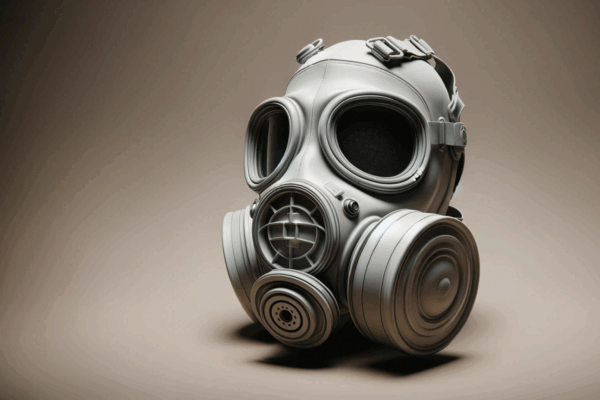
Discover the gas mask in BDSM
Discover the gas mask in BDSM. Masks are widely used in BDSM. But there are masks, there are intense masks, and then there’s the gas mask. I have to…
3 May 2026
What is a fetish, and what kinds are there?
What is a fetish, and what kinds are there? A fetish is a form of sexual attraction or desire that focuses on a specific object, body part, or…
7 April 2026
The various uses of masks
The various uses of masks. Masks come in all sorts of designs and also serve various functions. Most masks are made of leather or latex, but there…
8 April 2026