
What is the difference between BDSM and self-harm?
“What is the difference between BDSM and self-harm?” was written for BDSMforyou.nl by Mistress Moriah.
Self-harm is perhaps best known by the term “self-mutilation,” or, in other words, “self-injury” – the deliberate act of harming oneself. In psychology, this is seen as an expression of psychological pain, anger, or sadness. However, mutilation isn’t about yourself but about causing harm in general. In this case, it refers to intentionally harming your sub. That doesn’t necessarily have to be negative, though.
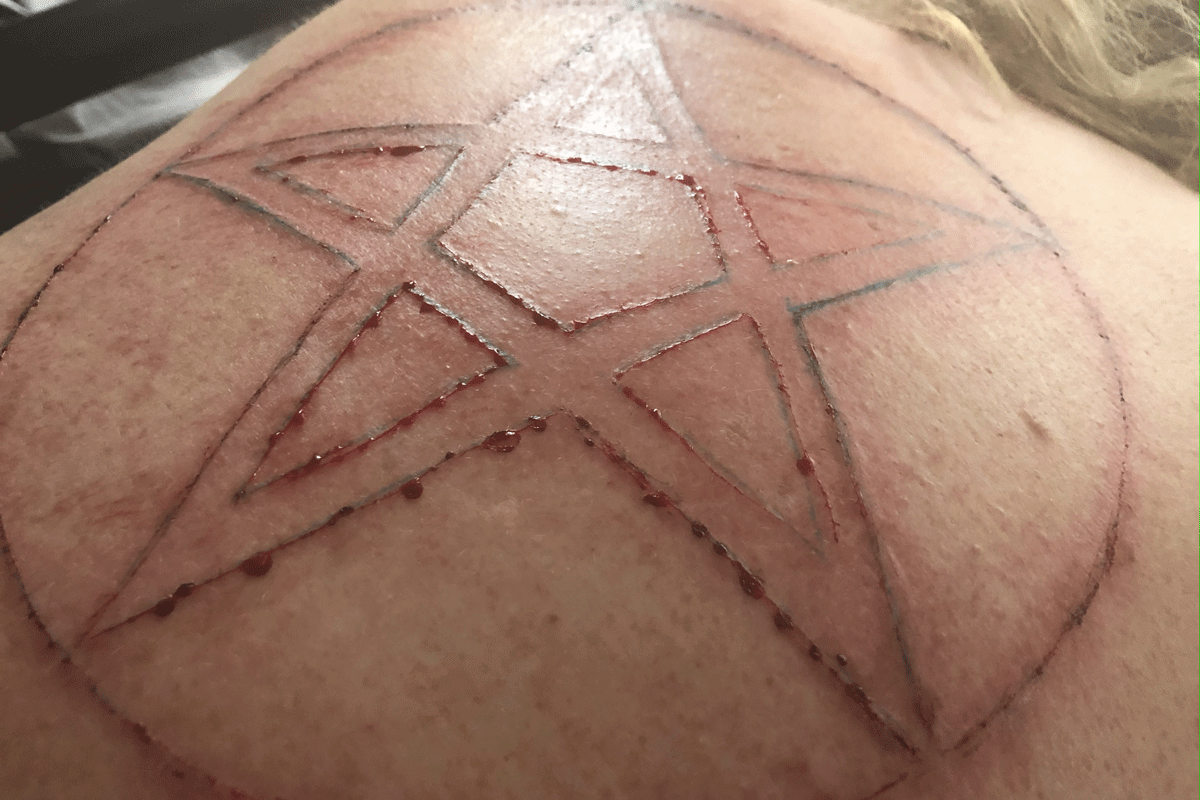
Forms of Mutilation
The full meaning of mutilation is:
1) The intentional cutting off or other removal of body parts, large or small.
2) Damage, disfigurement, injury.
So this actually refers to “permanent injury.” For many, this is a no-go (hard limit) within BDSM, but of course there are different degrees. Mutilation can take various forms, such as: deeper knifeplay, forced tattooing, applying a (forced) piercing, branding, welts from whipping, or making deeper incisions with a needle.
What is self-mutilation?
Since I think it’s important to explain the full concept of “mutilation,” here’s a brief clarification. However, BDSMforyou is not a psychological website, and BDSM is not a form of therapy.
As I mentioned in the first paragraph, self-harm is also known as self-injury or self-mutilation. It involves intentionally damaging one’s own body. It can be an expression of psychological pain and grief. It is about literally making this pain visible. Sometimes as a cry for help, sometimes as a way to gain control over one’s emotions. It can involve scratching, cutting, burning, and in extreme cases, it can even involve intentionally breaking bones. Self-harm is not about suicidal tendencies; on the contrary. Making the pain visually visible or gaining control over the situation is a survival mechanism. Of course, this form has nothing to do with BDSM, and it is wise to seek professional help.
In the DSM-5, self-harm is referred to as a “non-suicidal self-injury disorder” and is defined as “self-inflicted injury to body tissue, such as cutting, scratching, burning, or biting, without suicidal intent.”
Is BDSM also a form of (self-)mutilation?
There are likely to be various answers to that question. So many people, so many opinions. Some will indeed consider BDSM a form of (self-)mutilation, since the sub consciously chooses to be “tortured” or “inflicted with pain.” Others will feel that the two have nothing to do with each other. The deeper layers of BDSM are not so easily grasped, just like the human mind. There is still so much to discover. However, it is the intention, the expectation, the experience, and the form of mutilation that make the difference.
Ideally, the BDSM experience is perceived as positive. Both the Dominant and the sub enjoy this intense play. Afterward, both are left with a good feeling (at least, that is the intention). For example, pride when your Mistress’s name is tattooed on your buttocks, or when, as a TPE slave, you have received a brand. But also – to give a less intense example – the welts on your body after a vigorous whipping session, or the cuts after a vigorous knife play.
To the outside world, a brand mark might be unthinkable (not to use the words “utterly insane”), but for those involved, it can be a beautiful, intense affirmation to each other: “You are mine.” In this way, the act of mutilation can even offer a sense of security: “I belong to her/him,” “there is someone watching over me.”
Surrendering control
However, there is another fundamental difference. In (self-)mutilation (as an expression of pain), the goal is to gain control over oneself or intense emotions. In BDSM, on the other hand, the goal is precisely to surrender control. “I belong to You, and You decide what is good for me.” The intensity of this form of BDSM goes too far to explain it briefly here.
Finally, there is another major difference between psychological expression and self-harm within BDSM, namely the element of pleasure. A masochist derives pleasure from pain and will wear their marks with pride.
Self-harm can also have a different basis. Consider, for example, a desire to control the situation or as a punitive measure (atonement) to reduce feelings of guilt.
Professional Help
BDSM is intense and can bring beautiful things, but it is not therapy. If you feel that you are engaging in self-harm for the wrong reasons, make an appointment for professional help. They may be able to help you regulate the pain (or emotions) in a different way.
More information
Source
Text & image: Mistress Moriah

