
The importance of disinfecting the skin
In this article
“The importance of disinfecting the skin“ was written for BDSMforyou.nl by Mistress Moriah.
Hygiene is an important part of BDSM. In as many of the blogs I write about different forms of play as possible, I always try to point out the importance of good hygiene, and I give tips on how to play as safely as possible. On the one hand, it is important to play with clean and sound equipment; on the other hand, it is at least as important - for example with blood play - to disinfect and care for the sub's damaged skin properly. Sadly, I still hear sad stories about this. Apparently not everyone is aware of the risks yet.
The function of the skin
The skin is there for a reason. It is not only a marvellous organ that makes us so lovely to look at, but also our largest organ. However, our skin is not just there to keep our organs neatly in place (and protect them). The skin also regulates our temperature and protects us against attacks by hostile microbes from outside. That is why it is important that the skin stays intact (undamaged) as much as possible. If you get a scratch or a small wound, the body immediately springs into action to repair it. Logical, because our vulnerable insides need good protection.
The importance of disinfecting the skin
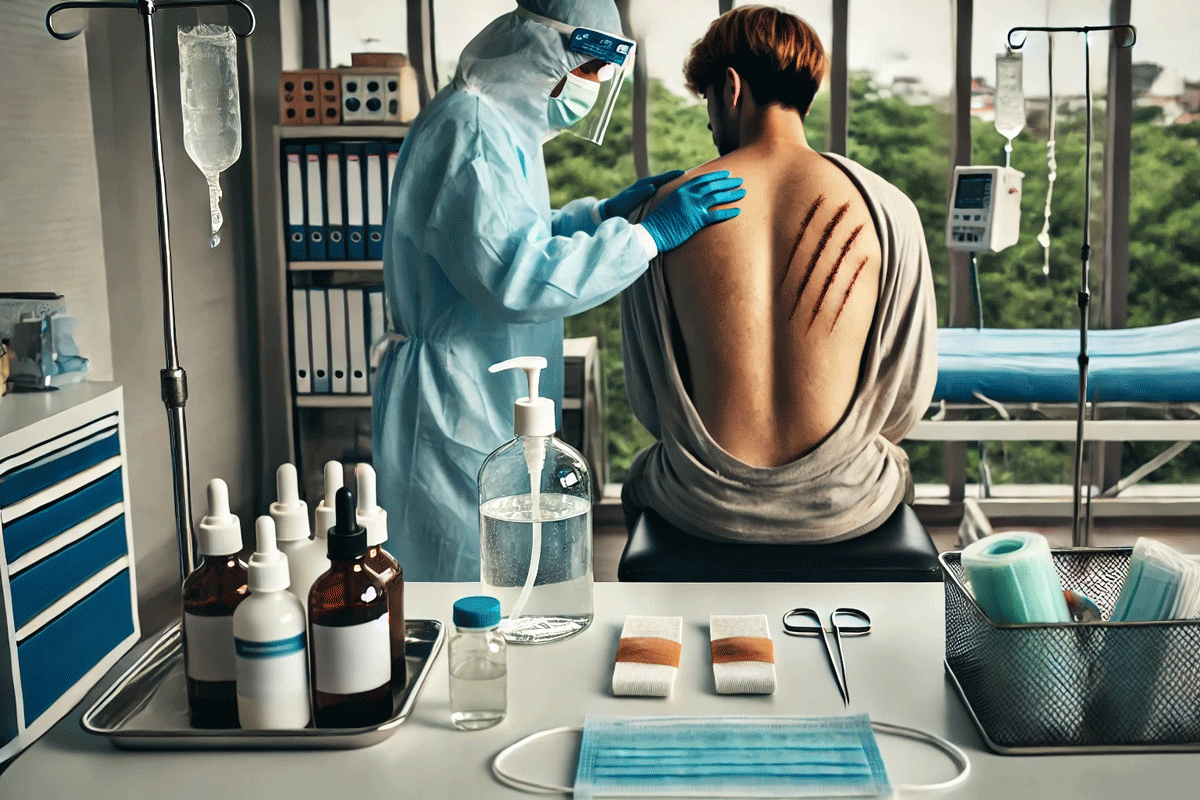
When you have a small wound - from vigorous whipping, needleplay, nails, blood play, biting or whatever else - it is important to disinfect the skin to prevent infections. As you have just read, our skin acts as a protective barrier against the outside world, including all kinds of bacteria, viruses and other micro-organisms that are found everywhere – on door handles, smartphones and so also on our hands (and under our nails).
Skin damage
When your skin is damaged, for example by a scratch from your nails, a welt from a whip, a prick from a needle or a graze, this barrier is broken. This gives bacteria and other harmful micro-organisms the chance to enter your body. Once inside, they can cause an infection, which can lead to redness, swelling, pus and pain. In serious cases, an untreated infection can even spread and cause serious health problems.
Faster healing
By disinfecting the wound, you clean the area and kill most of the bacteria that may be present there. This reduces the risk of infection considerably and promotes faster healing. Use a disinfectant for this, such as alcohol or an antiseptic solution, and apply it carefully to the wound. Don't forget to wash your hands before and after the treatment, so that you don't introduce extra bacteria.
The formation of scars
Besides the importance of disinfecting, there is something else to take into account, namely the formation of scars. There is nothing wrong with welts and scratches - with good care they eventually heal, so that you no longer see anything of them - but if the injuries are deep enough, scars can form. So here is some (medical) information about how scars form.
How do scars form?
Scars form as a result of damage to the skin that goes beyond the superficial layer (epidermis) and affects the deeper layers of the skin (dermis).
Skin damage and inflammatory response
When the skin is wounded by a cut, burn, deep scratch or welt, acne or another form of trauma, the superficial and sometimes deeper layers of the skin are damaged. Immediately after the injury, the body starts an inflammatory response. Platelets and white blood cells flow to the area to fight infection and clean the wound of dead cells and bacteria.
Proliferation phase
After the inflammatory phase, the body starts to produce new tissue. Fibroblasts, a type of cell in connective tissue, produce collagen to fill the wound. This process is known as fibroplasia. In this phase, a temporary structure forms that covers the wound, known as granulation tissue.
Maturation and remodelling
After the proliferation phase, the maturation phase begins, in which the new tissue is strengthened and organised. Collagen fibres are arranged and reshaped, making the scar tissue stronger. This process can take months to years.
Scars
The final scar tissue is usually stiffer and thicker than the surrounding skin and contains less elastin, which makes it less flexible. Scars can range from light and barely visible to thick and prominent, depending on the severity of the injury, the location, age and genetic factors.
Although scars are permanent, they can fade over time and become less noticeable. Treatments such as silicone dressings, laser therapy, microneedling and surgical procedures can help improve the appearance of scars.
Disinfection & BDSM
So it is important to know well what you are doing (and what the consequences can be) and to disinfect the materials you are going to use beforehand. You should also do this when you want to use your nails on someone. That is often forgotten. The toys are neatly cleaned, but then welts are made in the skin with the nails, without those having been cleaned first. Light scratching is of course fine without getting all the bells and whistles out of the bag, but if you plan to scratch someone more deeply, for example until they bleed, clean your hands with some alcohol first, because there are a lot of bacteria under those nails.
And afterwards, don't forget to disinfect the battered body part with some alcohol spray. Added pleasure: it stings!! So that's double the fun for your efforts!
Mistress Moriah
Source
Text: Mistress Moriah
Photography: 123rf.com
Dit artikel is ook beschikbaar in het Nederlands →
Read also

Biting sounds innocent, but it isn't
Biting sounds innocent, but it isn't. You really don't need a fully equipped dungeon to hurt someone. Even with just your hands, your feet
24 June 2024
BDSM and the importance of good hygiene
BDSM and the importance of good hygiene. Good hygiene may not be the most exciting subject I could talk about, but it is a very
10 July 2024
How can you tidy away your BDSM toys properly?
How can you tidy away your BDSM toys properly? A tidy space looks nice, but it's not just about "looking neat". Calm in your surroundings also means
29 January 2025