
The symbolism of the collar
“The symbolism of the collar“ is written for BDSMforyou.nl by Mistress Moriah.
Within BDSM, a collar is also simply called a collar. It can serve various functions, but the most obvious is that it is used to attach a leash to. Besides this practical function, though, wearing a collar is also a symbol of the (temporary) relationship between a sub and a Dominant (possibly fitted with an engraved dog tag). The collar is given to the submissive by the Dominant when the Dominant accepts the submissive as a partner in a BDSM setting, but it can also just be a practical item. It all depends on how you look at it yourself.
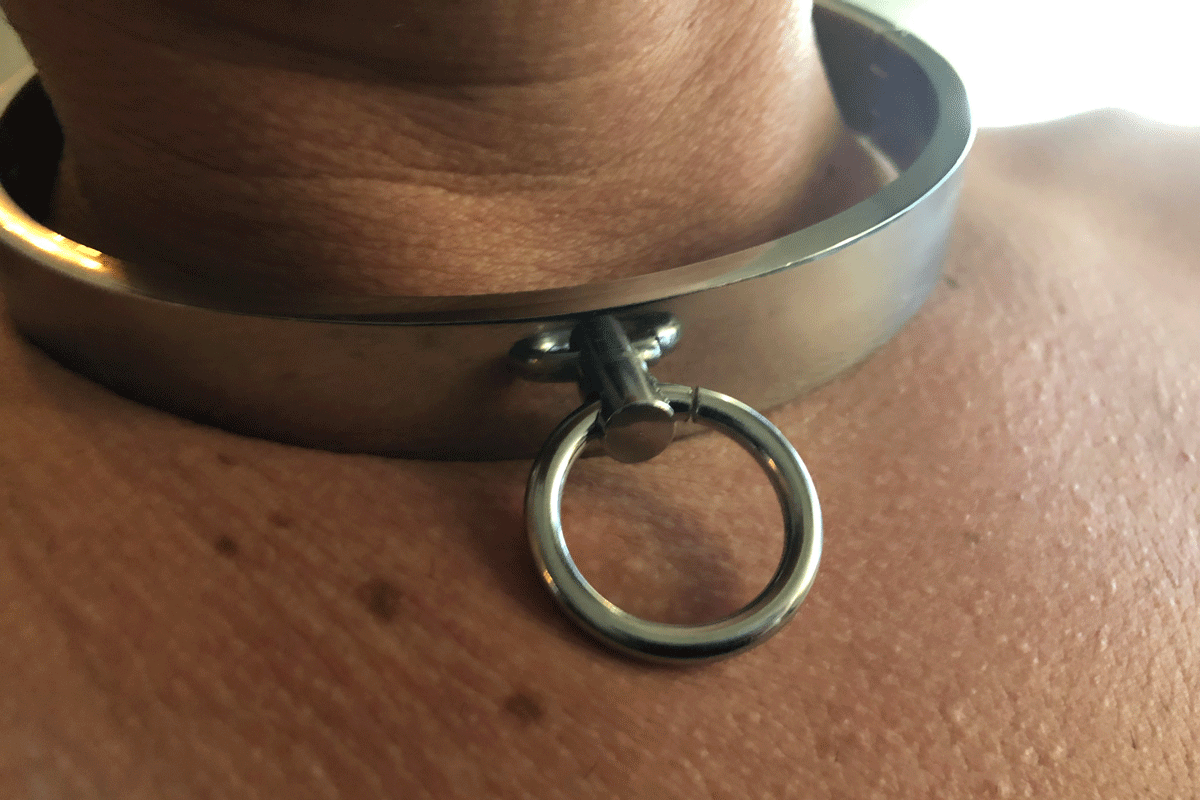
Necklaces
Special necklaces have also been made, so that the collar can be worn every day but is less conspicuous to the people around you. These collars usually cannot be removed by the sub. The Dominant keeps the key. The traditional collar often has an O ring. This O symbolically stands for Obedient. Besides that, such a ring is of course also very practical. After all, you can attach all sorts of things to it.
D/s relationship
For some people, 'collaring' a sub is the ultimate proof of their D/s relationship. This collar is often put on during a special ceremony. You can come up with your own ceremony for this, but you can of course also search online. This collar does not necessarily have to be a collar in the traditional form. It can also be a collar in the form of a necklace that is not so noticeable, but can therefore be worn at all times.
Three different collars
In traditional BDSM there are three moments of collaring. Of course, it is up to you whether you want to take part in this.
The introduction collar
This collar essentially says: “I find you interesting. Let's see where this goes.” The introduction collar, often made of leather but sometimes of metal or another creative material, sometimes contains a touch of blue. Perhaps a subtle blue pendant or a piece of fabric. The colour blue symbolises a kind of curiosity and openness.
You accept the collar as a sign of mutual interest. If it doesn't click after all? No problem, then you take it off and give it back.
The training collar
The second collar, also known as the training collar, is a sign that you now know each other better. The difference from the introduction collar is that you are now really engaged in exploring the limits, expectations and fantasies within your BDSM relationship. The blue accents of the introduction collar are swapped for red; think of a red flag, but in a good way.
As with the first collar, it is possible that things don't work out as expected. In that case it is time to part ways. The collar stays in the possession of the Dominant.
The slave collar
The slave collar is a serious statement. This is the moment when you enter into a lasting BDSM relationship. It may be accompanied by a rose ceremony, but it doesn't have to be. Sometimes receiving the collar goes together with having body markings applied, such as a tattoo or branding. But everyone decides that for themselves.
Accepting this collar means that you have become completely the property of your Dominant. You are devoted, with no way back. This is the real thing. The slave collar can be anything: from leather with rings and little locks to ornate metal constructions with hinges and screw closures. Some collars are real statement pieces, while others are more subtle, such as a fine little chain with a small padlock. There is no need for blue or red any more.
This collar stays with the slave, even after the relationship is broken off. After all, they have earned it with blood, sweat and tears.
Collar without a Dom(me)
Sometimes a collar is worn by a sub, without a Dominant, to show that they are submissive. Of course, everyone is free to do so. After all, submission is part of your whole being and is independent of whether or not you have a Dominant.
Mistress Moriah
Source
Text & photography: Mistress Moriah
Dit artikel is ook beschikbaar in het Nederlands →
Read also

TPE and dependency: is this not harmful?
TPE and dependency: is this not harmful? I recently posted an item on one of my social media channels about TPE or CIS (Complete Irrevocable
5 July 2024
TPE or Total Power Exchange
TPE or Total Power Exchange. I think TPE is BDSM taken to the extreme, especially if you take this concept literally. TPE is an acronym that stands…
23 March 2026
24/7 - What does 24/7 mean?
24/7 - What does 24/7 mean? BDSM is a blueprint for your relationship and will therefore vary from person to person and from couple to couple.
21 March 2026