
What does "in transition" mean?
In this article
- What does being "in transition" mean?
- How big is this group?
- Divided up
- Social transition
- Medical transition
- Legal transition
- When are you "in transition"?
- Choices within transition
- Risks and irreversibility of a transition
- Risks and challenges
- Psychosocial risks
- Support and care in the Netherlands
- Transition and BDSM: where they meet
- Not a copy of someone else
- Source
"What does "in transition" mean?" was written for BDSMforyou.nl by Mistress Moriah.
Although the process of being "in transition" is not specific to BDSM, it still deserves attention on this site. Within BDSM in particular, it is all about being allowed to be completely yourself - wanting to be seen as you are, in your entirety. And that applies just as much to people who are in transition. They too want to be able to show themselves in their true form. Within a community where authenticity and self-expression are so central, it is essential that this topic gets space as well.
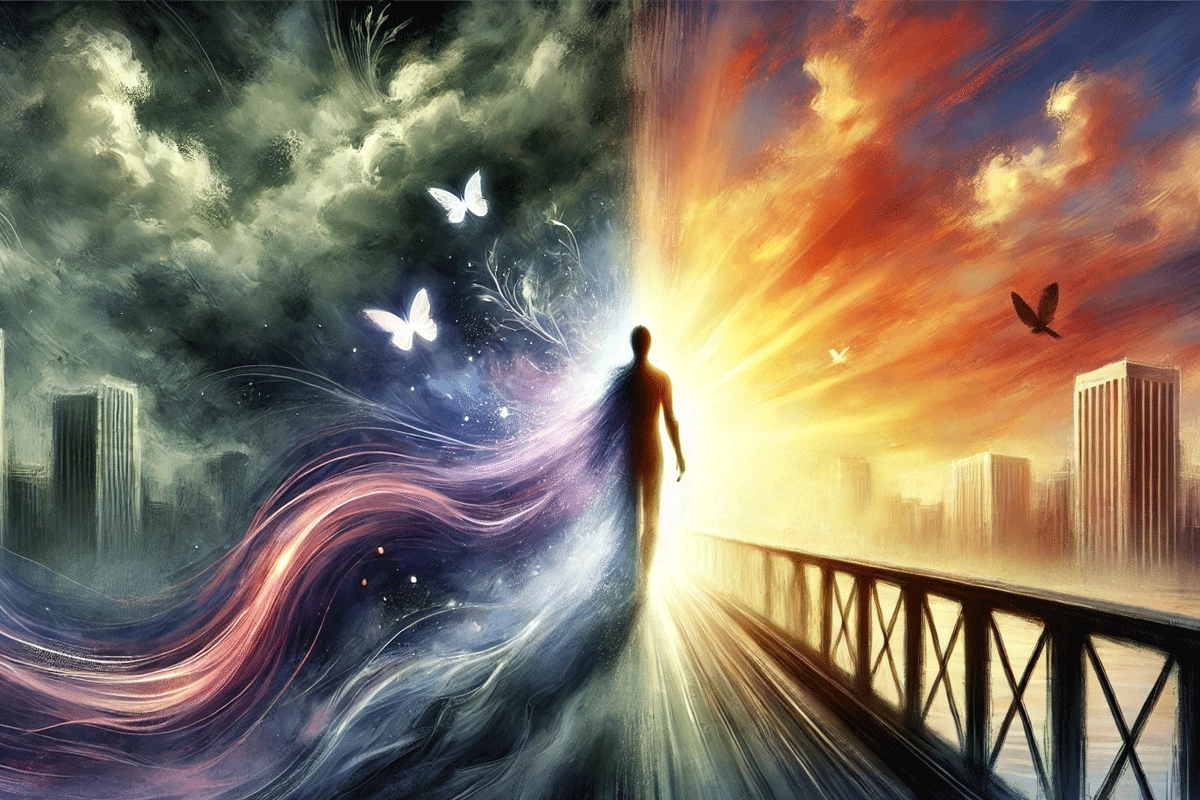
What does being "in transition" mean?
The term "in transition" refers to the process in which someone takes steps to bring their gender expression more in line with how they truly feel. This journey is deeply personal and looks different for everyone. Some people choose only social changes, others medical and/or legal steps. There is no standard route. Transition is a personal journey, in which every step is taken consciously and often after careful consideration.
How big is this group?
According to the Netherlands Institute for Social Research (SCP), 0.6% to 0.7% of the Dutch population identifies as transgender - around 100,000 people. In addition, 1.8% of Dutch people aged 16 and over identify as non-binary. In Belgium, hundreds of people have changed their gender registration since 2018. The rising figures show that more people feel they have the space to live their gender identity.
According to the website "Transgendernetwerk", these figures give a distorted and outdated picture. If you want to know more about this, head over to their site to read - according to them - the most up-to-date figures, as well as the links.
Divided up
In general, we can divide transition into three categories: social, medical and legal transition.
Social transition
Social transition means that someone expresses their gender identity in daily life. Think of choosing a different name and pronouns, a change in clothing style or hairstyle, or the process of coming out in social circles. For many people this is a first step - one that takes courage and that directly affects how the outside world sees you. Social acceptance plays a big part in this, and reactions can range from support to resistance.
Medical transition
Medical transition includes treatments aimed at physical changes. Examples are hormone therapy (such as testosterone or oestrogen), surgical procedures (such as chest surgery, genital operations or facial procedures), and voice therapy. Not everyone chooses medical steps. These choices depend on personal preferences, health, access to care, and any financial barriers.
Legal transition
A legal transition means that official documents are changed to match the experienced identity. Since 2014, it is no longer compulsory in the Netherlands to undergo medical procedures in order to change your gender registration. In Belgium this has also been the case since 2018. This involves things like changing a passport, driving licence or municipal registration. Although this step can be liberating, it is often also a bureaucratic process.
When are you "in transition"?
Someone is in transition as soon as they consciously take steps to live their own gender. That can be social, medical or legal, and in any order. For some it starts at a young age, for others only much later. Sometimes it is an inner decision that at first remains invisible to the outside world. Transition has no fixed starting or end point - it is not a checklist, but a growing process that adapts to the person and their life.
Choices within transition
Not everyone who is in transition chooses medical treatment. Some feel sufficiently at home with social changes alone, while others feel the need to also undergo physical changes to reduce gender dysphoria. Medical transition can consist of hormone therapy and/or surgery, depending on personal needs and health factors.
Risks and irreversibility of a transition
It is important to realise that there is not just one way to be in transition. Some choose to change socially only, others also want medical and legal changes. Non-binary people sometimes fall outside the boxes of the law and have to make different choices. Every transition is legitimate and deserves respect, regardless of the form it takes.
Risks and challenges
The medical side of a transition often includes hormone therapy and/or surgery. Hormone therapy – for example testosterone for trans men and oestrogen for trans women – brings changes that are usually desired, but can also have side effects such as mood swings, an increased risk of blood clots, cardiovascular disease and reduced fertility. The long-term effects differ from person to person and must be carefully monitored by a doctor.
Psychosocial risks
A transition also brings risks and challenges. Hormone therapy and operations have side effects or can cause complications. Psychosocially, people may face incomprehension, discrimination or the loss of relationships. That is why good medical and mental support is essential. Far from everyone receives that support in time, partly because of long waiting lists in transgender care.
Support and care in the Netherlands
The transition process often starts with the GP, who can refer you to a gender team or specialist. This is followed by a diagnostic phase in which the questions and wishes for help are mapped out. After that, people can - if desired - start with social transition, hormone treatment or operations. Legal changes can take place alongside this or separately from it. Every journey is tailor-made.
Transition and BDSM: where they meet
In my work as a Pro Domme, I have been able to speak with several people who were in transition, or had already walked a large part of their path. The biggest points of connection I found were in desire: the desire to be allowed to fully be there. To not merely play a role, but to let that role coincide with who you are. In BDSM we create a playing field in which you don't have to fit into boxes. Where you can look at yourself in a way that suits you. Where your reflection matches how you see (and feel) yourself on the inside.
For many trans people, that is also the core of their journey. And how beautiful it is when those worlds touch, strengthen and support each other. I believe that for some people BDSM can be a safe space to discover or embody parts of their identity that find no place elsewhere. And then it becomes not just play, but also a form of healing.
Not a copy of someone else
Transition is not an imitation of the other gender. It is a reconnection with yourself. And just as in BDSM, it is a search for authenticity, for wholeness. People in transition do not want to present themselves as something different. On the contrary, they want to be themselves - open and visible. Within a world where authenticity is celebrated, such as the BDSM scene, this is perhaps the place par excellence where there can be room for gender diversity.
Everyone deserves to be seen as they truly are. In the mirror, in the eyes of another, in the experience you share. That is why this topic belongs on this site. Not because BDSM and transition are connected by definition, but because both touch the core of being human: being allowed to be yourself, without masks, without apology. And I wish that for everyone - in every phase of who you become and/or are.
Mistress Moriah
Source
Text: Mistress Moriah
Photography: BDSMforyou
Dit artikel is ook beschikbaar in het Nederlands →
Read also
Long-held desires, and often it stays at that
Long-held desires, and often it stays at that. Maybe you too have long-held desires and this blog feels familiar to you... or maybe you are
16 August 2024
Serious sissy training at La Belle Sissy Academy
In January 2025 the proverbial doors of this Sissy Academy will open. The very first Sissy Academy in the Netherlands. A programme full of challenge…
3 October 2024
NEW: Sissy Training E-book
NEW: Sissy Training E-book. After “What is BDSM?” and “How do you become a good Femdom sub?”, Sissy Training is the third e-book to be released in…
15 June 2024