
Whips: Enjoy the beautiful sound of a whip
“Whips: Enjoy the Beautiful Sound of a Whip” was written for BDSMforyou.nl by Mistress Moriah.
How a whip or other striking implement is experienced depends on the hand wielding it, how it is received by the submissive, the atmosphere in which it is used, and the material. The intensity of the same whip can therefore vary not only from sub to sub but also from one session to the next. You can imagine that if the sub isn’t feeling quite right, everything hits him harder.
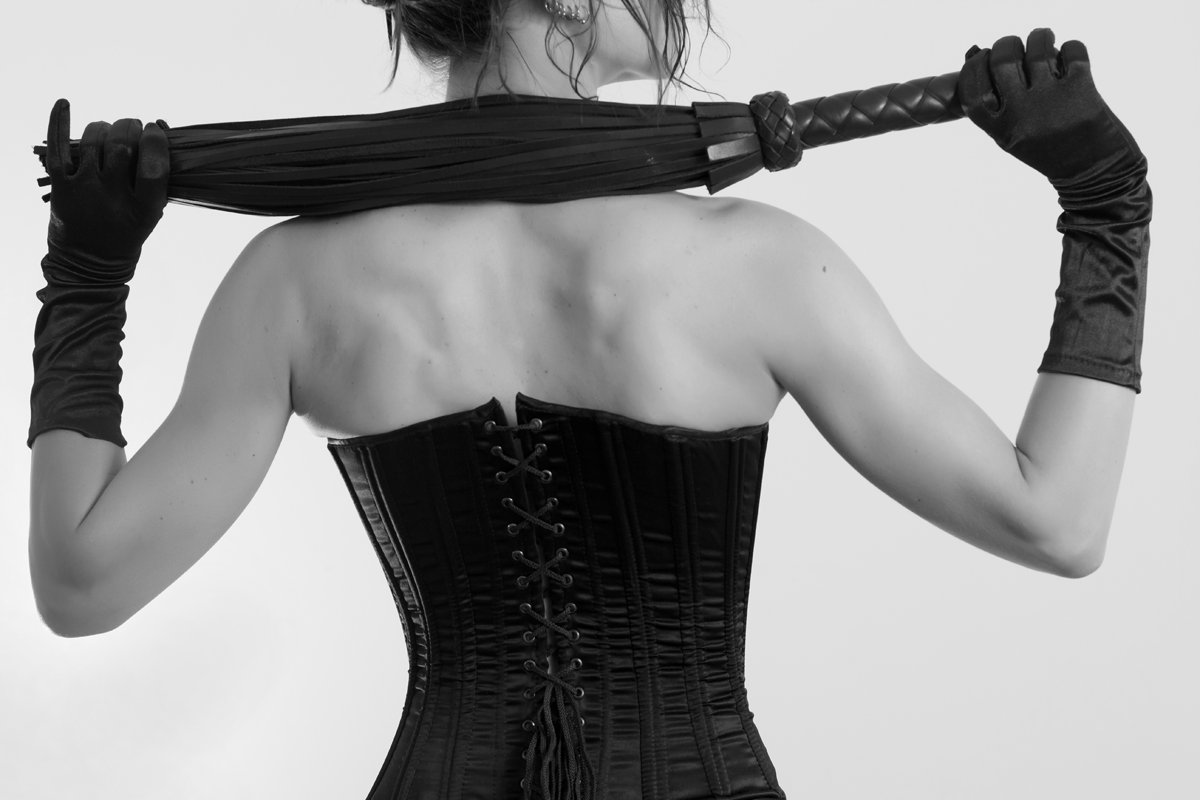
The Right Whip
If you’re still looking for a good whip that suits you, keep the following aspects in mind:
– length
– impact
– material
– technique
– care
– budget
Most whips have a handle (often with a metal core). Long whips end with a “fall” – the thinnest part – and terminate in a loose cord, the “crack.”
Within BDSM, there are various striking implements available. Roughly speaking, they can be divided into the following main groups:
Whips
- Single tail
- Bullwhip
- Snakewhip
- Signalwhip
- Stockwhip
- Floggers (Strip whip, Cat o’nine, and Tomcat)
- Horsehair
- Riding whips
These are the main groups, but there are also various materials that can influence the impact of the strike.
The material and impact of the whip
The behavior and impact of a whip are primarily determined by the properties of the whip strands. This impact can be described using two terms: “sting” and “thud”. A whip with a “stingy” effect causes a sharp, superficial pain, while a “thuddy” whip produces a duller, deeper pain.
The strands
The width of the strands plays an important role: wider strands result in more “thud,” while narrower strands cause more “sting.” The number of strips also has an impact: a greater number of strips leads to more “thud,” and fewer strips to more “sting.” So many wide strips produce a dull effect on the skin. Few narrow strips cause a sharp pain on the skin and also increase the likelihood of welts.
The shape of the ends of the strands is also important. Rounded or straight-cut ends are generally milder, while notched ends or knots produce a “stinging” effect.
Length of the whip
The length of the whip’s strands also affects the impact. Longer strands make the whip heavier and cause the ends to swing out more upon impact, which usually results in a more “thudding” sensation. However, the swinging of the ends can also create more “sting.”
What is the whip made of?
Finally, the material of the whip plays a role. Different types of leather have different effects. Generally speaking, softer, thinner, and more supple leather has a milder impact than harder, thicker, and stiffer leather.
A whip doesn’t always have to be made of leather. There are also whips made of unraveled rope, rubber, horsehair, or even metal chains. Every whip has a different impact, so it’s important to know in advance what effect a whip can have.
How do you build up a whipping session?
To properly prepare the skin and the sub first, always start a whipping session gently with a (relatively) soft whip. This could be a horsehair whip, but you can also use a soft leather flogger for this. Preferably one that’s a bit heavy. From there, you can gradually build up the whipping and keep switching to a different whip. If you notice it’s getting too intense, take a step back to a softer whip and start over.
You can strike in various ways with a whip. You can tickle with it, strike gently, and of course, strike hard. It’s precisely this variety that can make things exciting. Build up the play, vary your approach, and always keep an eye on your partner’s body. It’s not a competition; sometimes it’s all about subtlety.
Endorphins
Keep in mind that it takes about 10 to 20 minutes for the chemical endorphin to be released. This (physical) chemical reduces the perception of pain. So it’s important to build up the pain during the first few minutes and only strike harder after about 20 minutes.
You can choose to build up from soft to hard, but you can also vary the play, alternating between hard and soft strokes. Most submissives find the build-up to a climax the most pleasurable.
Don’t forget to caress the sub in between or do something they enjoy. Sometimes a short break can be nice to help you keep going longer. My subs always refer to this as “in-between care.” A quick caress, a brief pause, a moment for each other, before you can continue. This will be different for every sub. Some subs actually prefer it when you just keep striking and find such an interruption only annoying.
Where is the best place to strike?
First and foremost, it’s important that you know exactly what the whip does and how it strikes. This means you need experience to ensure the whip lands in the right spot. If this isn’t the case, it’s better to practice a bit first. You can do this just fine on a mattress or pillow.
Where should you avoid striking?
The head, spine, and neck are off-limits when it comes to whips. You simply shouldn’t strike the face or neck with a whip. The risk of injury is too high. These are never good places to strike. This also applies to suspicious moles. It’s best to avoid those as well. There is a chance it could be melanoma (skin cancer), so it’s best to stay away from those areas as well.
You should avoid the entire spine (from the tailbone to the neck) when striking. The spinal cord and a major bundle of nerves run through the spine. However, the spine lies close to the skin, which means the nerves can be easily damaged.
Also, avoid striking joints. Just as it’s not wise to apply pressure to wrists, knees, and ankles with knots during bondage.
Safe areas to strike are:
Upper arm
Shoulder blade
Buttocks
Thigh
Genitals (be careful with the testicles; the skin of the scrotum is quite thin)
Breasts
Palms
Soles of the feet
Areas where you need to be careful because they contain vital organs, for example, are:
Forearm
Abdomen
Hips
Shin
Lower back
Please strike these areas more gently. For the lower back, abdomen, and ribcage, this is due to the vulnerable organs located beneath them. Think of the kidneys, lungs, and spleen.
You should also take it easy on the forearms, shins, and hips. A whip can easily cause scars and damage in these areas. There are plenty of places where you can strike with full force, but these are the ones to avoid.
The technique of striking
It’s important to first practice “dry” with every new whip so you know how it behaves. With some whips, you’ll figure this out faster than with others. Some whips require a bit more practice. Before you strike a person with it, use a pillow, bathrobe, or mattress. Observe how the whip behaves and whether you can place it exactly where you want it. This way, you’ll get to know the whip better and better.
This helps you learn the perfect distance for striking so the whip makes proper contact, understand the impact, figure out the best way to hold the whip, and determine which arm and/or wrist movements to use to ensure the whip does exactly what you want. Experiment with this.
Whips
Any handle with a single strip of soft material (leather, rubber, plastic, rope, etc.) is a whip. But there are different types, and this statement isn’t entirely accurate.
Single tail
A single tail is slightly shorter than the bullwhip, making it easier to use. However, it is also a powerful whip with a fierce impact. You can master it more quickly, but you still need to be careful with this whip.
Bullwhip
A bullwhip is a single-strand, braided whip with a rigid handle. It’s a powerful whip that you really need to practice with before using it on a sub. The force with which the tip strikes the skin is quite intense. If you don’t handle the whip properly, you can cause serious injuries.
Originally, the bullwhip was made from rawhide. This is untanned cowhide from which the hair and flesh had been scraped off. With the rise of Australian whip makers, kangaroo leather bullwhips became popular.
The tip of a bullwhip can reach very high speeds. With this whip, you can produce those characteristic cracking sounds.
Snakewhip
This whip resembles the bullwhip, but the handle is also flexible. The tip (and thus the effect) is similar to the bullwhip, providing the same sensation (and risks). There are two types of snakes: the blacksnake and the pocketsnake. The pocketsnake is slightly smaller.
Signalwip
This whip resembles the snakewhip, but it lacks the fall. The popper is woven directly into the braided section of the whip.
Stockwhip
This is a whip with a long (often wooden) handle. The rest of the whip is attached via a hinge (the keeper).
Riding Whips
Riding whips include dressage whips and short riding whips. The dressage whip is a whip with a string at the end. The riding whip is the whip with a small flap of leather or rubber at the end. Incidentally, a crop has the same appearance as a riding whip.
Floggers
Floggers include so-called strip whips. They come in all kinds of materials, such as leather, rubber, webbing, fur rope, suede, plastic – you name it. The fewer the strips, the sharper the sensation will be. The wider and heavier the flogger, the duller the pain.
You can gently stroke the body with the flogger, but of course you can also strike hard with it. The more strands, the larger the surface area that can be struck and the duller the pain will be. The thinner the strands, the sharper the pain.
Some people distinguish between floggers and cats. Floggers are made of flat strands, and cats of braided or round strands. You can imagine that a cat feels more vicious (cutting) than a flogger.
Cat-o-nine
A cat-o-nine is a strip whip where the strips have knots or beads at the ends. Great for use on the shoulder blades and buttocks. A spicy whip. Not for beginners.
Tomcat
This is a variation on the cat-o-nine. The strands extend from the handle and flow seamlessly into the tails.
Horsehair
A horsehair whip is made from horsehair. They look sweet and soft, but make no mistake. The hairs make small cuts in the skin, which can still make it feel painful.
More information
Gently teasing with a tickling feather
Zwepen, canes & paddles – Theme page
Source
Text: Mistress Moriah
Photography: 123rf.com

