
Exhibitionism and Voyeurism: The Tension Between Seeing and Being Seen
In this article
“Exhibitionism and Voyeurism: The Tension Between Seeing and Being Seen” was written for BDSMforyou.nl by Mistress Moriah.
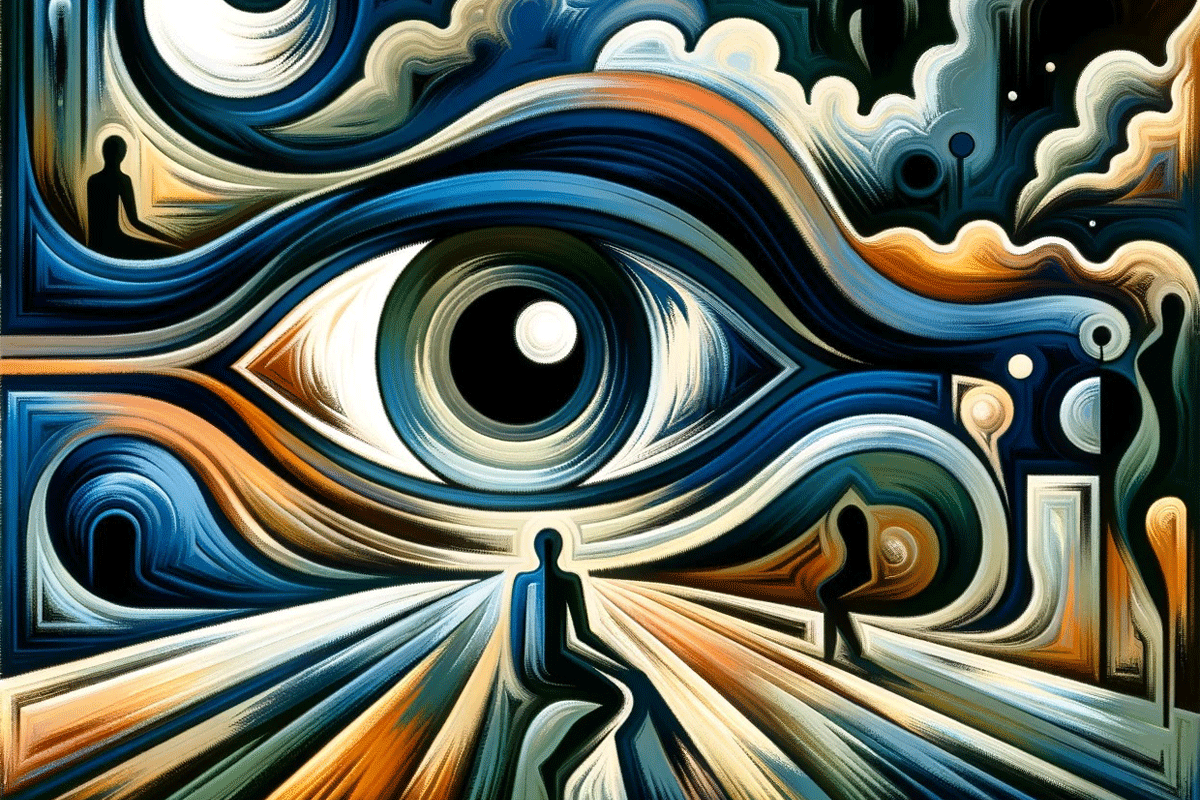
Exhibitionism and voyeurism take the concept of seeing and being seen to the next level. The terms are often mentioned in the same breath, but they are fundamentally different from one another. In fact, they complement each other, just like a submissive and a dominant, a masochist and a sadist, or a giver and a receiver. For one seeks the thrill in being seen (in a sexual manner) and the other in spying on intimate moments. Both, incidentally, without consent.
What is exhibitionism?
Exhibitionism is the phenomenon in which a person has a tendency to physically expose themselves to others, often in a sexual manner. This can range from unexpectedly exposing one’s genitals to wearing very revealing clothing in places where this is considered inappropriate. At the core of exhibitionism is the search for arousal and attention; it is an act that is often intensified by the viewer’s reaction.
What is voyeurism?
Voyeurism, on the other hand, is the practice in which someone derives pleasure from secretly observing others, often while they are in an intimate situation or undressing. This usually occurs without the knowledge or consent of the people being watched. Voyeurs seek the thrill of “not being seen”; the secrecy of their act heightens their pleasure.
What drives people to engage in these behaviors?
Psychologists suggest that both exhibitionists and voyeurs are often driven by a deep need for validation, excitement, or a way to exert control over a situation. It can also be a way to cope with stress or trauma, although the exact motives vary greatly from person to person.
But what about the law?
This is where things get murky. In many countries, exhibitionism - especially when done without consent and capable of shocking or disturbing others - is a criminal offense. Laws regarding voyeurism are equally strict, particularly as privacy legislation continues to evolve. Secretly filming or photographing people in private situations is illegal in most countries.
Yet these behaviors continue to occur, partly because they are also embedded in everyday life in less extreme forms. Take, for example, the popularity of reality television, where voyeurism is an accepted form of entertainment. Or consider social media, where people voluntarily and enthusiastically share details of their private lives - a kind of “digital exhibitionism.”
Thin and Subjective
The line between acceptable and unacceptable behavior in terms of exhibitionism and voyeurism remains thin and subjective. What is artistic expression or innocent entertainment for one person may be transgressive or uncomfortable for another. In this tension lies a complex mix of personal, cultural, and legal factors that determine where the boundaries lie.
Technological developments such as the internet and smartphones bring new challenges and questions. The debate over privacy, consent, and personal freedom is more relevant than ever, as we navigate a world where watching and being watched is a daily reality.
What do you think?
Where is the line between social acceptance and criminal liability? And how acceptable is it that men’s voyeuristic desires are commercially exploited? Consider, for example, the booming business of websites like OnlyFans. But even in everyday life, advertising stokes consumer desire by using photos of attractive and often scantily clad women who seem to believe they are unobserved.
Mistress Moriah
Source
Text: Mistress Moriah
Image: AI & Mistress Moriah
Dit artikel is ook beschikbaar in het Nederlands →
Read also

Fetish & Kinks - Theme Page
Fetish & Kinks Theme Page. The distinction between BDSM, fetish, and kinky isn’t always clear. Sometimes they’re so intertwined that it’s hard to…
19 March 2026
Why are there so many BDSM safety models?
Why are there so many BDSM safety models? Anyone who delves into BDSM will sooner or later come across a whole range of terms that all seem to say…
14 September 2026
Why do we fight each other when, in the end, we all want the same thing?
“Why do we fight each other when, in the end, we want the same thing?” was written for BDSMforyou.nl by Mistress Moriah. Sometimes I genuinely wonder…
8 September 2026